

Beyond Lithium Batteries: What China’s 600 MWh Liquid-Air Storage Project Means for Renewable Energy
How Liquid-Air Energy Storage Works, Why Ten-Hour Storage Matters, and What EPC Contractors Should Know About the Next Generation of Energy Infrastructure
Global Energy Storage Industry Insights | November 2026 | SNOSECURE
What if the next big energy storage breakthrough doesn’t depend on lithium, sodium, or any battery chemistry at all?
For years, battery energy storage systems (BESS) have dominated discussions about renewable energy flexibility.
Lithium iron phosphate batteries, in particular, have become a common choice for solar-plus-storage projects, utility-scale electricity networks, and commercial energy facilities.
But the transition toward renewable energy is creating demand for more than one storage technology.
The challenge isn’t simply storing electricity.
It’s delivering the right amount of electricity at the right time, for the required number of hours, at a commercially sustainable cost.
And that’s where liquid-air energy storage is attracting attention.
On October 30, 2026, a 60 MW / 600 MWh liquid-air energy storage facility in Golmud, Qinghai Province, China, connected to the grid and began generating electricity.
Reported by pv magazine Global on November 6, the project is designed to deliver its rated output for approximately ten hours.
Developed by China Green Development Investment Group in collaboration with the Chinese Academy of Sciences’ Technical Institute of Physics and Chemistry, the facility represents an important step toward utility-scale liquid-air storage deployment.
Unlike conventional battery storage, this system uses ordinary air as its working fluid.
Electricity powers the compression and cooling of air until it becomes liquid.
The liquid air is stored in insulated tanks.
When electricity is needed, the air is pressurized, warmed, expanded and used to drive a generator.
The process involves industrial refrigeration, cryogenic storage, heat exchange and turbine engineering.
For renewable energy developers, EPC contractors and industrial integrators, the news raises several questions.
Can liquid-air storage compete with lithium-ion batteries?
What makes ten-hour storage valuable for renewable energy?
How much electricity is lost during the storage cycle?
And what supporting infrastructure does a large-scale LAES facility require?
Let’s examine what the Qinghai demonstration actually reveals.
1. What Happened at China’s 600 MWh Liquid-Air Storage Project?
On October 30, 2026, China’s Qinghai liquid-air energy storage demonstration plant successfully connected to the power grid and began generating electricity.
The facility is located in Golmud, within the renewable-energy-rich Qaidam Basin.
According to the November 6 coverage, the project has the following headline specifications:
| Project detail | Reported specification |
|---|---|
| Location | Golmud, Qinghai Province, China |
| Storage technology | Liquid Air Energy Storage (LAES) |
| Rated discharge power | 60 MW |
| Rated energy capacity | 600 MWh |
| Nominal discharge duration | 10 hours |
| Liquefaction temperature | Approximately −194°C |
| First grid-connected generation | October 30, 2026 |
| Project developer | China Green Development Investment Group |
| Research partner | Technical Institute of Physics and Chemistry, Chinese Academy of Sciences |
What does 60 MW / 600 MWh mean?
The two numbers describe different aspects of the storage system.
60 MW refers to rated power.
This is the rate at which the facility is designed to deliver electricity.
600 MWh refers to rated energy capacity.
This is the amount of electrical energy the facility is designed to deliver under the specified rating.
Dividing rated energy by rated power gives the nominal full-power discharge duration.
600 MWh ÷ 60 MW = 10 hours
This doesn’t mean the plant generates 600 MWh every day regardless of operating conditions.
It also doesn’t tell us its actual round-trip efficiency.
What about the reported 180 GWh annual output?
The developer has reported an estimated annual electricity supply of approximately 180 GWh.
That is a projected operating figure.
Since the project only began generating electricity in October 2026, it should not be presented as independently verified annual production.
Why is this project significant?
Liquid-air storage has progressed from smaller research demonstrations to much larger industrial facilities.
The Qinghai project provides a major opportunity to evaluate grid-connected operations, system integration, equipment reliability and long-duration performance.
However, commercial readiness still requires evidence from sustained operation.
For EPC contractors, the project is an important engineering milestone—not proof that every future LAES project will achieve the same performance or economics.

2. What Is Liquid-Air Energy Storage?
Liquid-air energy storage is a form of thermomechanical energy storage.
Unlike electrochemical batteries, it stores energy by changing the physical state of air.
Air is abundant and can be collected directly from the surrounding environment.
But converting it into a cryogenic liquid requires substantial electrical energy and specialized equipment.
The process has three primary stages.
Stage 1: Charging — Compressing and Cooling Air
When surplus electricity is available, the system uses electric compressors to pressurize air.
The compressed air is then cooled through industrial heat-exchange and refrigeration processes.
At extremely low temperatures, the air can be liquefied.
During compression, heat is produced.
A well-engineered LAES system can capture some of that heat for use during the later discharge process.
Stage 2: Storage — Holding Liquid Air
The liquid air is transferred into insulated cryogenic storage tanks.
Unlike many compressed-air energy storage designs, LAES does not require an underground cavern.
Cryogenic tanks provide the storage vessel.
The tanks must be designed for their temperature, pressure, insulation, and process safety requirements.
Stage 3: Discharging — Expanding Air to Generate Electricity
When electricity is needed, liquid air is pumped to a higher pressure.
It is then warmed and vaporized.
The expanding gas drives turbine or expansion equipment connected to electrical generators.
The electricity can then be supplied to the grid.
Some LAES designs recover cold energy during discharge and store it for use in the next liquefaction cycle.
A simplified process
Surplus electricity → Air compression → Air liquefaction → Cryogenic storage → Reheating and expansion → Electricity generation
The technology combines elements of industrial gas processing, thermal energy management and power generation.
The important innovation is not simply making air cold. It’s recovering and managing energy efficiently across the complete charging and discharging cycle.

3. Why Does Ten-Hour Storage Matter for Renewable Energy?
Solar and wind power generate electricity according to available natural resources.
Demand, however, follows a different schedule.
For example, solar output may be strong during the middle of the day while electricity demand remains significant into the evening.
Energy storage can help shift some electricity generation to later periods.
Short-duration storage
Battery systems offering roughly one to four hours of discharge are commonly used in many grid applications.
Depending on their design, they may support:
- Frequency-related services.
- Short-term balancing.
- Peak demand management.
- Solar generation shifting.
- Local grid reliability.
Long-duration storage
Long-duration energy storage generally refers to systems capable of supplying electricity for extended periods, although the precise duration threshold differs by market and organization.
A ten-hour system can potentially support:
- Longer evening demand periods.
- Extended renewable energy shifting.
- Power system flexibility.
- Certain backup and reserve applications.
- Managing prolonged supply-demand imbalances.
Why does duration affect project economics?
A storage facility with a higher power rating isn’t necessarily designed for longer discharge periods.
A 100 MW / 200 MWh system offers a nominal two-hour duration.
A 60 MW / 600 MWh system offers a nominal ten-hour duration.
They serve different operational needs.
However, longer duration does not automatically mean better economics.
Developers must evaluate charging costs, operating frequency, available revenue, reliability, and the value of electricity delivered.
The question isn’t whether ten hours is better than four hours. It’s whether the grid or customer actually needs ten hours of storage.

4. Round-Trip Efficiency: The Most Important Technical Trade-Off
Liquid-air energy storage is an energy conversion system.
Electricity enters during charging.
Electricity is recovered during discharge.
But not all the input electricity can be recovered.
This is why round-trip efficiency matters.
What is round-trip efficiency?
Round-trip efficiency measures the electrical energy discharged relative to the electrical energy used to charge the storage system, under a defined measurement boundary.
For example, if a system consumes 100 MWh of electricity to charge and later delivers 60 MWh, its electrical round-trip efficiency is 60%.
This is a hypothetical example—not a measured result from the Qinghai project.
Why can LAES lose energy?
Energy losses can occur through:
- Air compression.
- Refrigeration and liquefaction.
- Heat transfer.
- Cryogenic storage.
- Pumps and turbines.
- Electrical conversion.
- Auxiliary equipment.
What do technical studies suggest?
The IEA Energy Storage Technology Collaboration Programme’s 2024 LAES fact sheet describes an indicative 50%–65% power-to-power efficiency range for certain adiabatic system designs without external heat supply.
This should not be treated as a certified efficiency range for every commercial LAES project.
Actual performance can depend on system architecture, heat and cold recovery, operating conditions and equipment design.
How does LAES compare with lithium-ion batteries?
Many commercial lithium-ion battery systems are designed for higher electrical round-trip efficiency than conventional LAES configurations.
However, efficiency alone does not determine the best storage technology.
Project decisions also depend on:
- Storage duration.
- Installed cost.
- Operating life.
- Maintenance.
- Charging electricity prices.
- Site conditions.
- Equipment reliability.
- Availability and revenue requirements.
Why heat recovery matters
The Qinghai project reportedly recovers heat from compression and cold energy from the discharge process.
These recovery mechanisms can improve thermodynamic performance.
But the project’s actual verified round-trip efficiency should be assessed using measured operating data.
Lower round-trip efficiency can be an important economic disadvantage—but it doesn’t automatically eliminate LAES from long-duration applications.

5. Liquid-Air Storage vs Lithium-Ion BESS: Which Is Better?
Liquid-air storage and battery systems use fundamentally different technologies.
A useful procurement comparison must evaluate complete installed systems rather than chemistry or technology labels alone.
| Evaluation area | Liquid-Air Storage | Lithium-Ion BESS |
|---|---|---|
| Storage mechanism | Cryogenic liquid-air and thermal energy processes | Electrochemical storage |
| Primary equipment | Compressors, heat exchangers, tanks, pumps, turbines | Battery cells, racks, PCS, BMS and thermal systems |
| Typical applications | Multi-hour and long-duration bulk storage | Grid services, energy shifting and duration-specific applications |
| Round-trip efficiency | Configuration-dependent, often lower | Generally higher in many commercial configurations |
| Site requirements | Industrial plant footprint and cryogenic systems | Battery containers/racks and electrical infrastructure |
| Geology dependency | No underground storage cavern required | No underground cavern required |
| Maintenance | Rotating machinery, cryogenic and thermal process equipment | Battery systems, power electronics and auxiliary equipment |
| Lifetime assessment | Equipment design, maintenance and operating cycles | Calendar aging, cycle degradation and augmentation |
| Safety engineering | Cryogenic, pressure, oxygen-deficiency and machinery hazards | Electrical, battery fault, thermal and fire hazards |
| Commercial maturity | Emerging large-scale deployment | Extensive installed experience |
Where lithium-ion BESS remains attractive
Lithium-ion systems benefit from established manufacturing scale and substantial operating experience.
Their modular construction can be useful for many project sizes.
They are particularly competitive for applications requiring frequent charging and discharging, fast response, and suitable short-to-medium discharge durations.
Where LAES may become attractive
LAES can be evaluated for longer-duration storage, especially where geological conditions limit other mechanical storage technologies.
Its industrial machinery and tank-based architecture may appeal to developers with relevant process engineering capabilities.
Potential integration with heat and cold recovery systems also deserves consideration.
Which technology will win?
Neither technology is universally superior.
A developer selecting between LAES and batteries should evaluate whether each system meets the same dispatch duration, power delivery, reliability and financial requirements.
The most useful comparison is not liquid air versus lithium. It’s the complete cost and performance of delivering the required electricity service.

6. Could Liquid-Air Storage Improve Renewable Energy Economics?
Long-duration storage can help shift electricity from periods of surplus supply to periods of higher demand.
But the commercial value varies by electricity market.
Energy arbitrage
Storage may charge when electricity is relatively inexpensive and discharge when its value is greater.
The economics depend heavily on price differences and round-trip efficiency.
Renewable energy integration
Storage can help manage periods when solar or wind generation does not align with demand.
It may also reduce some renewable energy curtailment, depending on grid conditions and dispatch arrangements.
Capacity and reliability services
Certain markets compensate qualified storage resources for dependable capacity or grid services.
Eligibility depends on local regulations and market rules.
Industrial integration
Some LAES configurations can use industrial heat or other thermal resources to improve system performance.
The availability and economic value of these resources are site-specific.
What determines total project cost?
Developers should examine:
- Compressors and liquefaction equipment.
- Cryogenic storage tanks.
- Thermal storage and heat exchangers.
- Turbines and generators.
- Civil works.
- Grid interconnection.
- Engineering and commissioning.
- Maintenance.
- Financing.
- Electricity charging costs.
What about LCOS?
Levelized Cost of Storage (LCOS) can help compare lifetime storage costs under defined assumptions.
A fair comparison needs consistent definitions for charging energy, capital costs, operating expenses, efficiency, financing and energy throughput.
A cheaper storage medium does not automatically produce cheaper delivered electricity.
For investors, LAES project economics must be demonstrated through realistic dispatch models and measured system performance—not just headline storage capacity.
7. What Does the Qinghai Project Mean for Global EPC Contractors?
The Qinghai demonstration highlights a different equipment and engineering supply chain from lithium-ion batteries.
Potential LAES EPC work includes:
Cryogenic equipment
Industrial tanks, heat exchangers, insulation and low-temperature process components.
Compression and expansion machinery
Compressors, pumps, turbines, generators and related rotating equipment.
Thermal management
Heat recovery, cold storage, process controls and supporting pipework.
Electrical infrastructure
Transformers, switchgear, protection equipment, grid connections and communications.
Civil engineering
Foundations, equipment yards, buildings, access roads and mechanical installations.
Automation and safety
Industrial control systems, instrumentation, process protection, appropriate gas monitoring and emergency response systems.
Site operations
Physical security, maintenance access, equipment monitoring and communications infrastructure.
What should international suppliers consider?
Each project will have its own technical specifications and qualification requirements.
Procurement managers should evaluate:
- Equipment engineering standards.
- Supplier manufacturing capability.
- Project references.
- Performance warranties.
- Factory acceptance testing.
- Delivery schedules.
- Maintenance and spare parts.
- Local installation and after-sales support.
A large LAES demonstration is a potential signal of future procurement activity—not confirmation that identical facilities will be built at the same scale or cost.

8. Cryogenic Facility Safety: Why Specialized Engineering Remains Essential
Liquid-air storage does not use lithium-ion battery cells as its primary storage medium.
But that does not make the facility risk-free.
LAES uses industrial equipment operating under demanding thermodynamic conditions.
Potential hazards can include:
- Very low-temperature surfaces.
- Cryogenic liquid handling.
- Pressure-related equipment risks.
- Oxygen displacement in poorly ventilated areas.
- Oxygen enrichment under certain conditions.
- Rotating machinery.
- Electrical equipment.
- Process control failures.
Suitable engineering measures may include specialized pressure protection, temperature monitoring, ventilation, oxygen monitoring, process instrumentation, emergency shutdown functions and other relevant safeguards.
The required systems depend on facility design and applicable standards.
Are LAES facilities safer than lithium-ion BESS?
A universal safety comparison cannot be established simply from the storage medium.
The hazards are different.
Lithium-ion facilities require appropriate battery-specific protection.
LAES plants require suitable cryogenic and industrial process protection.
Different technology doesn’t mean no risk—it means a different engineering safety framework.
9. Why Physical Security Matters for Liquid-Air Energy Storage Sites
Large-scale energy storage facilities contain valuable infrastructure.
A LAES plant may include:
- Cryogenic storage tanks.
- Compressors and turbines.
- Transformers.
- Electrical switchgear.
- Industrial control and communications equipment.
- Construction materials.
- Access roads and perimeter boundaries.
Some facilities may operate in remote industrial locations.
Others may be developed alongside renewable generation or grid infrastructure.
Potential physical security concerns
Unauthorized access.
Theft of equipment or materials.
Vandalism.
Unmonitored vehicle activity.
Unauthorized entry into restricted industrial areas.
Where surveillance can help
Access gate monitoring: Observe designated vehicle and personnel entrances.
Perimeter surveillance: Provide visual coverage of selected boundaries.
Equipment yard monitoring: Monitor outdoor materials and equipment areas.
Remote video access: Allow authorized operators to observe selected locations.
Incident recording: Maintain footage for physical security investigations, subject to retention and privacy requirements.
What surveillance cannot do
Ordinary CCTV cameras are not substitutes for specialized cryogenic safety instrumentation, oxygen monitoring, pressure protection, emergency shutdown or process control systems.
Surveillance should be incorporated into the facility’s physical security design.
For industrial developers, process safety and physical security are complementary—but distinct—engineering responsibilities.

10. Can Solar-Powered 4G Cameras Support Remote LAES Construction Sites?
During early construction, permanent power and broadband infrastructure may not yet be available at every location.
For appropriate temporary monitoring tasks, solar-powered 4G security cameras can provide additional flexibility.
Application 1: Temporary construction entrances
Monitor designated vehicle access points.
Application 2: Equipment storage yards
Provide supplementary surveillance for materials and equipment awaiting installation.
Application 3: Remote perimeter areas
Observe selected fencing or boundaries where cabling is difficult.
Application 4: Project development locations
Support remote visual monitoring before permanent infrastructure is completed.
What should EPC contractors verify?
Camera selection should consider:
- Solar charging capacity.
- Usable battery energy.
- Cellular signal availability.
- Supported 4G frequency bands.
- Recording mode and availability.
- Environmental protection.
- Cybersecurity.
- Integration requirements.
- Installation and maintenance.
Solar 4G systems are not automatically suitable for continuous or mission-critical recording.
For permanent industrial facilities, wired and appropriately networked surveillance systems may be preferable.
Off-grid cameras should be selected according to the security task and operating conditions—not simply because the facility is located in a remote area.

11. Ten Questions EPC Contractors Should Ask Before Investing in LAES
Before evaluating a liquid-air energy storage project, consider the following.
1. What discharge duration does the project actually require?
Avoid selecting ten-hour storage without a clear operational need.
2. What is the verified round-trip efficiency?
Review measured electrical input and output using consistent boundaries.
3. What is the usable storage capacity?
Distinguish nameplate energy from actual deliverable output.
4. How are heat and cold recovered?
Understand the operating assumptions and maintenance requirements.
5. What are the total installed costs?
Include machinery, storage tanks, civil works and electrical systems.
6. What are the expected operating costs?
Consider maintenance, charging electricity, auxiliary energy and staffing.
7. What evidence supports long-term reliability?
Request operating references, technical documentation and warranties.
8. What process safety systems are required?
Confirm appropriate cryogenic, pressure, oxygen and emergency protection.
9. What physical security and communications are needed?
Plan access control, surveillance, network architecture and remote monitoring.
10. Can suppliers support the full project lifecycle?
Assess manufacturing, commissioning, spare parts and technical support.
For professional buyers, these questions help distinguish an attractive technology concept from an executable infrastructure project.

Frequently Asked Questions
What is liquid-air energy storage?
Liquid-air energy storage is a thermomechanical technology that uses electricity to compress, cool and liquefy air, stores the liquid in cryogenic tanks, and later generates electricity through reheating and expansion.
Is China’s 600 MWh project already operational?
The Qinghai project connected to the grid and began generating electricity on October 30, 2026. However, that milestone does not provide a complete long-term operating history.
What does 60 MW / 600 MWh mean?
The facility has a reported rated power output of 60 MW and rated energy capacity of 600 MWh, giving a nominal ten-hour discharge duration.
Does 600 MWh mean the facility generates 600 MWh every day?
No. Rated energy capacity is not actual daily or annual generation. Delivered energy depends on charging, dispatch, availability and operating conditions.
What is the efficiency of liquid-air storage?
Efficiency varies by system architecture. A 2024 IEA Energy Storage TCP technology fact sheet gives an indicative 50%–65% power-to-power range for certain adiabatic configurations. This is not a verified performance measurement for the Qinghai project.
Is liquid-air storage better than lithium-ion batteries?
Not universally. Batteries often provide higher round-trip efficiency and extensive commercial experience. LAES may be attractive for some longer-duration applications and sites where tank-based storage is advantageous.
Does LAES require underground caverns?
No. Liquid air can be held in insulated cryogenic tanks, although the facility still requires suitable industrial land and infrastructure.
Is liquid-air storage completely safe?
No industrial energy storage technology is free from risk. LAES requires specialized cryogenic, pressure, machinery and process safety engineering.
Can LAES support solar and wind energy?
Yes, potentially. It can store electricity during periods of surplus generation and deliver it later, subject to system capability and grid requirements.
Can solar 4G cameras monitor LAES construction projects?
They may support appropriate temporary access, equipment yard and perimeter monitoring applications. They are not substitutes for industrial process safety instrumentation.
Conclusion: Long-Duration Storage Is Moving Beyond Lithium Batteries
China’s Qinghai liquid-air energy storage demonstration represents an important development in long-duration storage.
The facility’s 60 MW power rating, 600 MWh energy capacity and nominal ten-hour discharge duration show how thermomechanical storage can be developed at industrial scale.
It also demonstrates that energy storage innovation is not limited to new battery chemistries.
Compressors, cryogenic tanks, heat recovery systems and turbines can form an alternative electricity storage architecture.
However, the project’s long-term economics and performance must be evaluated with actual operating data.
Round-trip efficiency, reliability, capital cost, maintenance and revenue conditions remain critical.
For EPC contractors and renewable energy developers, the message is clear.
The next phase of energy storage will likely involve multiple technologies selected according to duration, site requirements and lifecycle economics.
And as these facilities develop, physical security, communications and supporting industrial infrastructure will remain important project considerations.
About SNOSECURE | Your OEM/ODM Surveillance Camera Manufacturing Partner
SNOSECURE is a B2B surveillance equipment manufacturer and wholesale supplier based in Shenzhen, China.
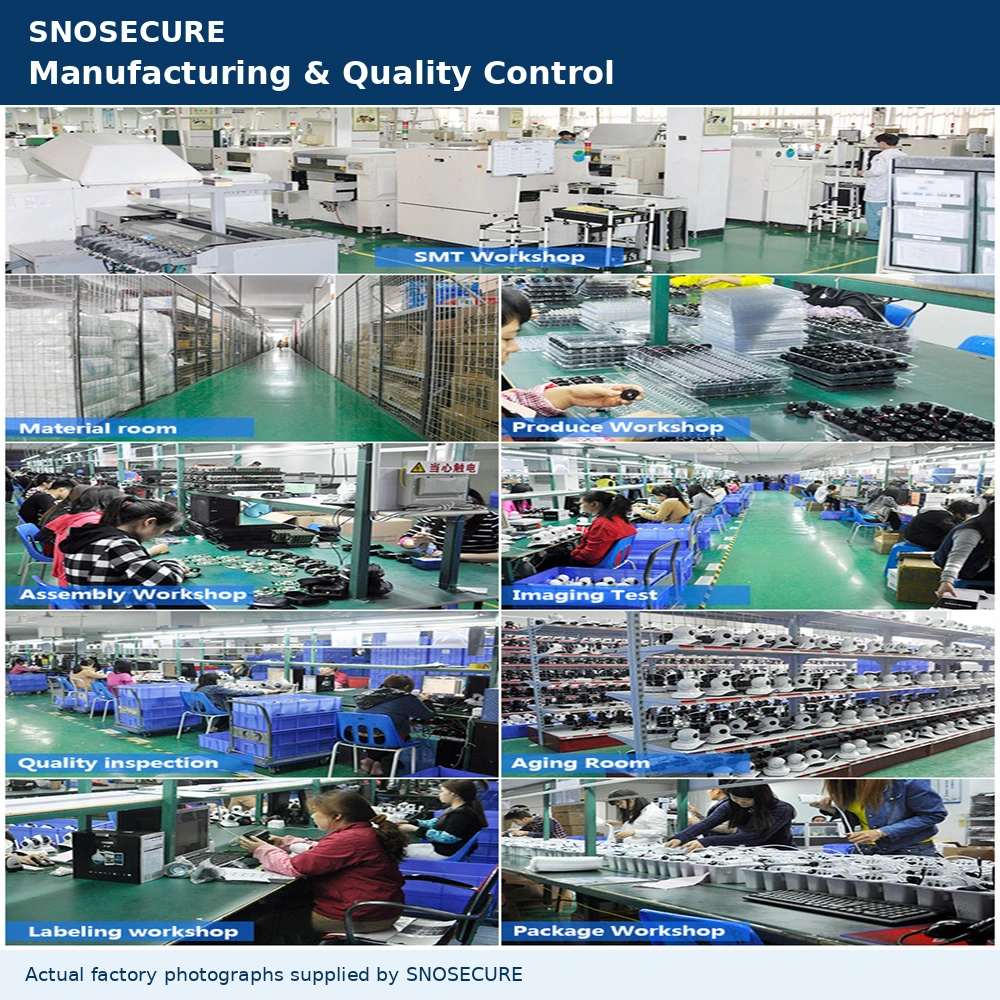
With 20 years of manufacturing experience, 6 production lines and a 12,000m² factory, SNOSECURE supports security brands, electronics importers, distributors, renewable energy contractors and system integrators.
Our product portfolio includes:
- Solar-powered security cameras.
- 4G and Wi-Fi surveillance cameras.
- AOV solar cameras.
- NVR security camera systems.
- Solar panels and related surveillance accessories.
- Video doorbells.
- Baby monitors.
- Hunting cameras.
We support OEM/ODM customization, including product design, logo branding, packaging and suitable hardware configurations.
For renewable energy facilities, industrial construction sites, access gates and remote equipment yards, SNOSECURE can discuss appropriate physical surveillance and remote monitoring products.
Specific recording functions, cellular compatibility, certifications and integration capabilities depend on the selected model.
SNOSECURE manufactures surveillance equipment—not liquid-air energy storage plants or cryogenic process safety systems.
Our surveillance cameras are not replacements for pressure protection, oxygen monitoring, cryogenic instrumentation or emergency shutdown systems.
Looking for surveillance equipment for renewable energy infrastructure projects?
You can contact SNOSECURE to discuss camera specifications, sample evaluation, OEM/ODM customization and wholesale supply.
Website: https://www.camhiprocam.com
Email: simple@camhiprocam.com
WhatsApp: +86-185-6568-6066
SNOSECURE | Professional Surveillance Camera Manufacturer
Industry References
pv magazine Global — November 6, 2026
World’s Largest Liquid-Air Storage Facility Comes Online in China
China Energy Storage Alliance — November 8, 2026
World’s Largest Liquid Air Energy Storage Project Connects to Grid in China
IEA Energy Storage TCP — July 2024
Technology: Liquid Air Energy Storage
https://www.iea-es.org/wp-content/uploads/public/FactSheet_mechanical_LAES.pdf
Applied Energy — June 2026
Analysis of Liquefaction Processes for Liquid Air Energy Storage Systems
https://www.sciencedirect.com/science/article/pii/S0306261926003533
