

India’s 92 GWh Energy Storage Push: What EPC Contractors and Global Suppliers Should Watch
India Energy Storage 2026: New Funding, Battery Projects, Domestic-Content Rules, EPC Procurement, and Infrastructure Security Opportunities
Global Energy Storage Industry Insights | November 2026 | SNOSECURE
What happens when one of the world’s largest electricity markets announces support for 92 GWh of new energy storage capacity?
For renewable energy developers, EPC contractors, battery suppliers, and infrastructure investors, it creates a significant pipeline of potential projects.
But it also raises important questions.
How will the projects be financed?
Which storage technologies will receive support?
What does India’s new 40% domestic-content requirement mean for international suppliers?
And what supporting infrastructure will developers need as construction activity expands?
On November 4, 2026, India’s Union Cabinet approved a ₹14,500 crore Viability Gap Funding scheme designed to support 92 GWh of grid-scale energy storage development.
The program covers the period from FY 2026–27 to FY 2030–31 and is associated with an estimated ₹97,600 crore of total project investment.
The planned capacity includes:
- 30 GWh of Battery Energy Storage Systems (BESS).
- 60 GWh of Pumped Storage Projects (PSP).
- 2 GWh of alternative energy storage technologies.
The government also announced a minimum 40% domestic-content requirement for BESS projects under the scheme.
For international suppliers, these numbers are important.
But they require careful interpretation.
The 92 GWh represents planned supported storage capacity, not operating battery installations or 92 GWh of confirmed equipment purchase orders.
For EPC contractors and technology distributors, the opportunity lies in understanding how India’s storage market will develop—and preparing the right products, partnerships, compliance documentation, and infrastructure support.
Let’s examine the announcement and its implications for global buyers.
1. What Did India’s Government Announce on November 4, 2026?
India’s Ministry of Power announced a new financial support program designed to accelerate grid-scale energy storage development.
The scheme provides ₹14,500 crore of viability gap funding over FY 2026–27 to FY 2030–31.
According to the official announcement, the supported storage capacity is expected to contribute to India’s broader requirement of approximately 411 GWh of grid-scale energy storage by FY 2031–32.
How is the capacity divided?
The 92 GWh target is distributed across three technology categories.
Battery Energy Storage Systems — 30 GWh
These projects use electrochemical batteries to store and discharge electricity.
Pumped Hydro Storage — 60 GWh
Pumped hydro facilities store energy by moving water between reservoirs at different elevations.
Alternative Storage Technologies — 2 GWh
This allocation is intended for other emerging energy storage technologies.
The technology breakdown matters because the equipment, construction processes, financing arrangements, safety requirements, and supply chains differ.
Why is 92 GWh significant?
Energy storage provides flexibility to electricity networks.
It can help shift electricity generated during high-renewable-output periods to times when demand is greater.
Depending on the technology and system design, storage may also support grid balancing and reliability.
India’s expanded storage investment is intended to support renewable energy integration and reduce some of the challenges created by variable electricity generation.
An important clarification
Government approval of a funding scheme is not the same as commissioning an energy storage facility.
Individual projects must still proceed through procurement, financing, construction, connection, testing, and commissioning.
For global suppliers, this represents a developing procurement market—not a guarantee of immediate orders.

2. What Is Viability Gap Funding, and Why Does It Matter?
Viability Gap Funding, or VGF, is a form of public financial support intended to help make eligible infrastructure projects commercially viable.
Large energy storage projects require substantial upfront investment.
A typical battery storage project can include:
- Battery cells, modules, racks, and containers.
- Power conversion systems.
- Transformers and switchgear.
- Battery management systems.
- Energy management and control systems.
- Fire and gas safety equipment.
- Civil construction.
- Grid interconnection.
- Engineering and commissioning.
- Communications and site infrastructure.
Developers also need to account for financing costs, maintenance, battery degradation, insurance, and project risk.
These costs can create challenges for investment decisions, particularly when project revenue is uncertain.
How can VGF help?
Public support may improve the commercial viability of qualifying projects by reducing their effective funding gap.
This can help projects compete for capital and potentially make storage services more affordable.
However, VGF does not eliminate all investment risk.
Project developers still need realistic assumptions about:
- Installed project costs.
- Construction schedules.
- Financing terms.
- Operating expenses.
- Project availability.
- Electricity-market revenues.
- Battery performance.
- Contractual obligations.
₹14,500 crore vs ₹97,600 crore: What’s the difference?
The government announced ₹14,500 crore of funding support.
It also estimated total investment of ₹97,600 crore across the eligible capacity.
The first number represents the public VGF allocation.
The second represents the government’s broader investment estimate.
They are not interchangeable.
And neither figure should be interpreted as a guaranteed procurement budget for battery equipment alone.
For BESS investors, financial support can strengthen a project—but disciplined engineering and realistic project economics remain essential.

3. Battery Storage vs Pumped Hydro: Where Are the Real Opportunities?
The program includes more pumped hydro capacity than battery storage capacity.
That does not mean both technologies will create the same procurement requirements.
Battery Energy Storage Systems
Battery storage facilities commonly use containerized or modular electrical equipment.
Depending on system design, they may provide:
- Short-duration energy shifting.
- Peak demand support.
- Frequency-related grid services.
- Renewable energy integration.
- Dispatchable capacity for defined durations.
Lithium-ion technologies are commonly used in modern BESS developments, although different chemistries and configurations may be selected.
For EPC contractors, the work can include battery installation, power electronics, interconnection, control systems, civil infrastructure, and commissioning.
Pumped Hydro Storage
Pumped hydro projects require substantially different infrastructure.
Depending on the site, construction can involve:
- Reservoirs.
- Waterways and tunnels.
- Pump-turbines.
- Powerhouses.
- High-voltage infrastructure.
- Major civil engineering.
- Environmental management.
These projects are more closely tied to suitable geography and civil engineering requirements.
Alternative storage technologies
The remaining 2 GWh allocation creates a potential route for other storage technologies.
However, their commercial opportunities will depend on future procurement conditions and technology qualification requirements.
What should suppliers understand?
A company supplying BESS electrical equipment may not automatically qualify for pumped hydro projects.
Similarly, civil engineering contractors specializing in hydro infrastructure face different requirements from containerized battery integrators.
Successful international sourcing starts by identifying the correct technology segment and its actual procurement specifications.

4. India’s 40% Domestic-Content Requirement: What Global Buyers Should Know
One of the most important aspects of the new scheme is its domestic-content requirement.
The November 4 government announcement states that BESS projects under the scheme will be subject to a minimum 40% Domestic Content Requirement (DCR).
The policy is intended to encourage domestic manufacturing and reduce dependence on imported components.
Does this mean India is banning imported batteries?
No such blanket prohibition is established by this announcement.
A domestic-content requirement and an import ban are different policy mechanisms.
A project may be required to meet a defined minimum share of domestic content while still using eligible imported components.
However, exact sourcing decisions will depend on the final rules and tender requirements.
What does 40% domestic content mean?
The headline establishes a minimum requirement for relevant BESS projects.
But a procurement team must still determine how that requirement is calculated.
Questions include:
- Which equipment and services count toward local content?
- Is the calculation based on total qualifying project value or another defined base?
- What documentation establishes domestic origin?
- Which manufacturing or assembly operations qualify?
- What certification or verification is required?
- How will compliance be checked during project delivery?
The November 4 announcement does not provide every calculation and verification detail.
Don’t confuse different schemes
India has previously used domestic-content and procurement conditions under other BESS support arrangements.
Requirements under those earlier schemes should not automatically be applied to the newly announced program.
International suppliers must review the legal and procurement documents governing their specific project.
What should global equipment manufacturers do?
First: Identify which Indian EPC contractors and developers are likely to bid.
Second: Understand whether the equipment falls within the tender’s defined domestic-content scope.
Third: Evaluate local partnerships, assembly, technical support, and sourcing strategies where commercially relevant.
Fourth: Prepare accurate country-of-origin and product documentation.
Fifth: Obtain project-specific compliance guidance before making binding commitments.
For international manufacturers, local supply-chain planning may become an important competitive factor.
The 40% DCR is a project procurement issue requiring detailed classification—not a universal restriction on every product imported into India.

5. How Will EPC Contractors Benefit From India’s Energy Storage Expansion?
Energy storage investment can create opportunities throughout the project development cycle.
However, opportunities depend on whether individual projects successfully proceed through bidding and execution.
Project development
Developers may need land, grid connection studies, permits, financing, and project design services.
Engineering
BESS projects require electrical engineering, system integration, protection design, communication architecture, civil engineering, and commissioning plans.
Equipment procurement
Potential categories include batteries, PCS, transformers, switchgear, cables, control systems, and supporting infrastructure.
Construction
Installation contractors may be involved in foundations, equipment positioning, cabling, access roads, fencing, and integration.
Commissioning
Projects require testing, configuration, safety verification, and acceptance procedures.
Operations and maintenance
Once operational, storage facilities require ongoing inspection, monitoring, preventive maintenance, software support, and suitable security management.
Why this matters for global suppliers
The opportunity is broader than supplying battery cells.
Projects need multiple equipment categories and specialized supporting services.
However, qualified suppliers must demonstrate technical suitability, documentation, local compliance, delivery capability, and after-sales support.
For B2B companies, the strongest opportunities will come from matching a specific project need rather than treating the entire 92 GWh program as one procurement contract.
6. Competitive Bidding: Why Lowest Price Isn’t the Whole Story
The Indian government’s announcement states that storage capacity will be allocated through tariff-based competitive bidding.
This creates an important commercial consideration.
In competitive procurement, developers may face pressure to submit attractive tariff offers.
But aggressive pricing can introduce financial and delivery risks when project assumptions are unrealistic.
For EPC and procurement teams, the key cost areas include:
Capital expenditure
Equipment, installation, grid interconnection, engineering, and commissioning.
Financing
Interest rates, debt terms, equity return requirements, and construction-stage financing.
Operating expenses
Maintenance, auxiliary electricity, software, insurance, and ongoing support.
Equipment performance
Storage efficiency, degradation, availability, and any required augmentation.
Delivery risk
Supply-chain delays, grid-connection constraints, construction challenges, and compliance costs.
Long-term reliability
Equipment quality, warranty conditions, spare parts, technical support, and maintainability.
Industry analysts have highlighted the risks of financially unsustainable bidding and uncertain utilization in India’s developing storage market.
For developers, public financial support should not replace rigorous financial due diligence.
Winning a tender and delivering a commercially sustainable storage project are two different achievements.

7. Why Site Security Matters for BESS Construction Projects
Energy storage facilities contain valuable electrical infrastructure.
During development and construction, equipment may arrive long before the site is fully operational.
That creates practical physical security requirements.
Consider the materials and assets that may be present:
- Battery storage containers.
- Transformers and electrical equipment.
- Power conversion systems.
- Copper cables.
- Construction machinery.
- Temporary storage yards.
- Communications equipment.
These assets may be spread across a large construction compound.
Some projects are located in remote areas with limited personnel present outside working hours.
Potential security risks
Unauthorized access.
Equipment theft.
Vandalism.
Unmonitored vehicle movements.
Damage to temporary infrastructure.
Where surveillance can support site operations
Suitable systems may provide:
Access gate monitoring
Video coverage of vehicles and personnel at designated entrances.
Perimeter surveillance
Observation of fencing, boundaries, and selected vulnerable areas.
Equipment yard monitoring
Additional visibility of material storage areas and valuable equipment.
Remote visual access
Authorized off-site viewing of selected areas.
Incident recording
Footage to support investigation of physical security events.
However, surveillance architecture should be designed for the individual site.
Camera coverage, networking, environmental conditions, recording retention, and cybersecurity must be considered.
A critical safety distinction
Conventional CCTV cameras are not replacements for specialized BESS fire detection, gas detection, battery management, or thermal runaway protection systems.
Surveillance serves physical security and visual monitoring needs.
Battery safety requires independently engineered and appropriate protective systems.
For developers, physical security should be part of project planning—not an unexpected addition after valuable equipment arrives.

8. Can Solar-Powered 4G Cameras Help Monitor Remote BESS Sites?
Some energy storage construction projects may not have permanent electrical power or wired broadband during their early phases.
In these situations, solar-powered 4G surveillance cameras may provide a useful supplementary monitoring option.
Application 1: Temporary access gates
A solar-powered camera may monitor selected site entrances without permanent wired power.
Application 2: Equipment storage areas
Remote video monitoring can support the physical security of designated temporary storage areas.
Application 3: Construction progress visibility
Where permitted and appropriately configured, cameras may provide authorized visual updates from selected construction zones.
Application 4: Remote perimeter points
Solar 4G cameras may extend monitoring to locations where conventional cabling is not yet practical.
What should EPC contractors evaluate?
Solar camera performance depends on several technical factors.
Solar charging capacity
The panel must collect enough energy for the camera’s intended workload.
Battery reserve
The system should be sized for expected periods of reduced sunlight.
Cellular compatibility
The camera must support suitable local frequency bands and have adequate network coverage.
Recording architecture
PIR-triggered, AOV, and other recording modes have different operating characteristics.
Remote access security
Authorized access, firmware support, credential management, and network security matter.
Environmental durability
Temperature, dust, rain, solar exposure, and installation conditions must be considered.
Maintenance
Camera cleaning, battery health, network connectivity, and physical mounting should be included in the maintenance plan.
Are solar 4G cameras suitable for every BESS project?
No.
Where continuous high-availability recording, centrally managed video systems, or strict infrastructure security requirements are necessary, permanently powered and appropriately networked surveillance may be preferable.
Solar 4G cameras are best evaluated as one option within a broader site security architecture.
For EPC contractors, the correct camera is the one that meets the project’s actual monitoring requirements—not merely one advertised as off-grid.

9. What Should Indian EPC Contractors Ask Surveillance Equipment Suppliers?
Before sourcing cameras for an energy infrastructure project, procurement managers should verify both technical requirements and supplier qualifications.
1. What monitoring tasks are required?
Gate coverage, equipment monitoring, perimeter security, or construction progress visibility?
2. Is permanent power available?
Determine whether wired, solar-powered, or hybrid camera power is appropriate.
3. Is reliable network connectivity available?
Evaluate wired Ethernet, Wi-Fi, 4G, and network redundancy where needed.
4. What recording architecture is necessary?
Event recording, AOV, or continuous recording may be appropriate for different locations.
5. What integration is required?
Check NVR, VMS, and platform compatibility using actual model specifications.
6. What cybersecurity support is available?
Ask about firmware updates, secure access, encryption, credentials, and vulnerability management.
7. What documentation is required?
Confirm applicable product certifications, technical datasheets, warranty terms, and origin documentation.
8. Does the tender impose local procurement conditions?
Verify whether the particular surveillance equipment is covered by any project-specific domestic-content or procurement requirement.
Do not assume that the scheme’s BESS DCR automatically determines the status of all separately procured CCTV products.
9. Is the equipment serviceable?
Evaluate spare parts, replacement options, technical support, and maintenance requirements.
10. Can the supplier support project quantities and customization?
Confirm lead times, testing, documentation, OEM/ODM options, and consistency across batches.
For international buyers, these questions help reduce installation issues and improve the quality of procurement discussions.

10. What Does India’s 92 GWh Program Mean for International Suppliers?
India’s energy storage expansion creates potential opportunities, but successful market entry requires careful planning.
Understand your product category
Battery suppliers, solar equipment manufacturers, surveillance suppliers, and engineering contractors serve different procurement requirements.
Identify the right customers
Potential customer groups include:
- Renewable energy developers.
- Storage system integrators.
- EPC contractors.
- Electrical infrastructure contractors.
- Security system integrators.
- Industrial equipment distributors.
- Construction monitoring service providers.
Evaluate local procurement rules
Some projects may have domestic-content, sourcing, certification, or documentation requirements.
These must be assessed through the applicable tender and contract.
Build suitable partnerships
Local engineering, installation, logistics, and service partners may improve project delivery.
Avoid unsupported claims
A supplier should not claim eligibility for India’s VGF scheme without confirming the applicable project and procurement conditions.
Likewise, a CCTV manufacturer should not imply its products provide specialized BESS fire or thermal runaway protection unless the products are actually designed, qualified, and approved for those functions.
Focus on long-term reliability
EPC contractors need equipment that can be installed, maintained, and supported over the required project life.
That includes suitable product specifications, stable supply, and transparent after-sales arrangements.
The strongest B2B positioning is based on practical project value, not simply the size of the announced government program.
Frequently Asked Questions
What is India’s 92 GWh energy storage scheme?
It is a government-approved Viability Gap Funding program supporting the development of 92 GWh of grid-scale energy storage capacity during FY 2026–27 to FY 2030–31.
How much funding has India approved?
The government announced ₹14,500 crore of VGF financial support, alongside an estimated ₹97,600 crore of total project investment.
Is India building 92 GWh of battery storage?
No. The program covers 30 GWh of batteries, 60 GWh of pumped hydro, and 2 GWh of alternative technologies.
Are all 92 GWh already installed?
No. The November 2026 announcement refers to planned storage capacity yet to be commissioned.
What does the 40% domestic-content requirement mean?
The government announced a minimum 40% domestic-content requirement for BESS projects under the new scheme. The applicable calculation and compliance obligations must be determined from implementation guidance and relevant bidding documents.
Does India prohibit imported BESS equipment?
The announcement does not establish a blanket import ban. Individual sourcing decisions depend on applicable trade law, procurement rules, and project-specific conditions.
How will projects be selected?
The government states that capacity will be allocated through tariff-based competitive bidding.
What opportunities exist for EPC contractors?
Potential opportunities include project design, civil works, electrical installation, equipment procurement, system integration, commissioning, and ongoing maintenance.
Can solar 4G cameras be used at BESS construction sites?
For appropriate applications, solar-powered 4G cameras may support selected access points, equipment yards, and temporary monitoring areas. Their suitability depends on network coverage, solar charging, battery autonomy, recording needs, and security requirements.
Can conventional CCTV prevent battery thermal runaway?
No. Ordinary CCTV is not a substitute for specialized BESS battery management, gas detection, or engineered fire-protection systems.
Conclusion: India’s Storage Expansion Is a Procurement Opportunity—But Not a Shortcut
India’s November 2026 energy storage announcement is an important signal for the global renewable energy industry.
The ₹14,500 crore VGF scheme aims to support 92 GWh of new storage capacity across batteries, pumped hydro, and alternative technologies.
It also introduces a 40% domestic-content requirement for supported BESS projects, making local sourcing and procurement compliance important considerations.
For developers and EPC contractors, the opportunity is significant.
But success will depend on competitive project economics, suitable engineering, financing, supply-chain execution, and long-term reliability.
For international suppliers, the right approach is to identify actual project requirements, monitor tender developments, understand local procurement rules, and build relationships with qualified implementation partners.
Supporting infrastructure also matters.
BESS construction sites and operating facilities may require physical security, access monitoring, communications, and maintenance support.
The real commercial opportunity is not simply selling equipment into a growing market. It’s helping qualified project teams deliver dependable infrastructure.
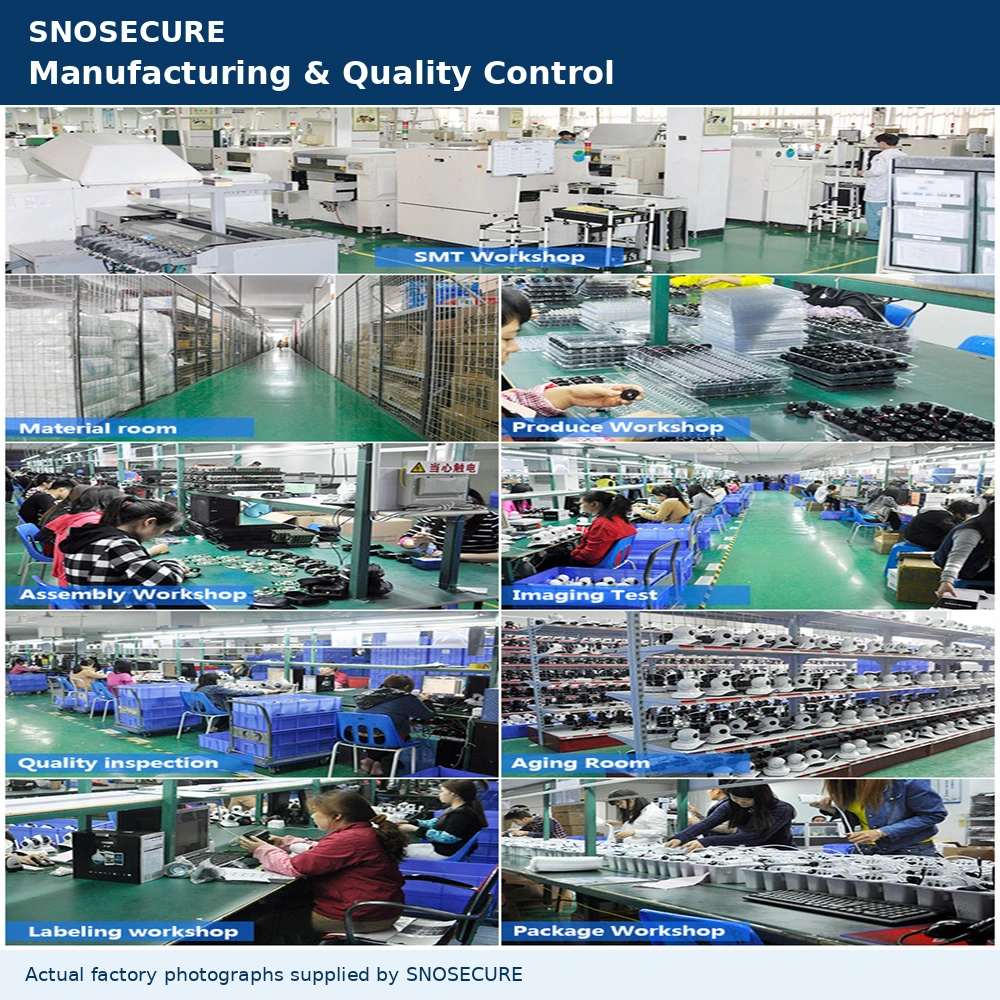
About SNOSECURE | Your OEM/ODM Surveillance Camera Manufacturing Partner
SNOSECURE is a professional B2B surveillance equipment manufacturer and wholesale supplier based in Shenzhen, China.
With 20 years of manufacturing experience, 6 production lines, and a 12,000m² factory, SNOSECURE supports international security brands, electronics importers, distributors, retailers, solar project contractors, IT hardware resellers, and system integrators.
Our product portfolio includes:
- Solar-powered security cameras.
- 4G and Wi-Fi surveillance cameras.
- AOV solar cameras.
- Solar panels and solar routers.
- NVR security camera kits.
- Video doorbells.
- Baby monitors.
- Hunting cameras.
We support OEM/ODM customization, including product design, logo branding, color boxes, packaging, and compatible product configurations.
For solar-plus-storage construction projects, remote energy facilities, temporary access points, and selected perimeter monitoring applications, SNOSECURE can discuss available surveillance equipment configurations and wholesale sourcing requirements.
Specific recording functions, 4G compatibility, integrations, certifications, and customization capabilities depend on the selected model and configuration.
SNOSECURE‘s cameras are intended for surveillance and physical security applications. They are not substitutes for specialized BESS thermal runaway detection, gas monitoring, or engineered fire-protection systems.
Our main export markets include North America, Japan, the United Kingdom, France, the UAE, Saudi Arabia, South Africa, and other international regions.
Looking for a reliable OEM/ODM surveillance camera manufacturing partner for energy infrastructure projects?
Contact SNOSECURE to discuss product specifications, sample evaluation, solar 4G camera options, NVR systems, branding, packaging, and wholesale supply.
SNOSECURE | Professional Surveillance Camera Manufacturer
Website: https://www.camhiprocam.com
Email: simple@camhiprocam.com
WhatsApp: +86-185-6568-6066
Contact: Simple Lee | Sales Director
Industry References
Government of India — November 4, 2026
Cabinet Approves ₹14,500 Crore Viability Gap Funding Scheme for Development of 92 GWh Grid-Scale Energy Storage Systems
https://www.pib.gov.in/PressReleasePage.aspx?PRID=2332474&lang=1®=48
Prime Minister’s Office — November 4, 2026
India’s Energy Storage VGF Scheme Announcement
pv magazine Global — November 6, 2026
India Approves Funding Scheme for 92 GWh Grid-Scale Energy Storage
Financial Express — November 5, 2026
Analysis of Financing and Implementation Challenges for India’s Energy Storage Program
