

Winter Solar Camera Performance: Why Sunlight Hours Alone Don’t Tell the Whole Story
Peak Sun Hours, Cloudy-Weather Charging, 4G Power Consumption, AOV vs PIR Recording, Battery Sizing and Cold-Weather Reliability
Solar Security Camera Industry Insights | November 2026 | SNOSECURE
Your solar security camera receives eight hours of daylight. So why is its battery still running low?
It’s a common question for security camera distributors, installers and customers operating solar-powered surveillance systems during winter.
The answer is more complicated than the number of hours between sunrise and sunset.
A camera’s winter reliability depends on how much usable solar energy its panel actually collects—and whether that energy is sufficient to support the camera’s daily operating workload.
Cloud cover, solar elevation, panel orientation, battery temperature and recording activity can all influence performance.
New European solar irradiation research illustrates why this matters.
On November 6, 2026, Solcast, a DNV company, reported significant geographical differences in solar irradiation during October 2026.
According to the analysis published by pv magazine Global:
- Much of Europe recorded solar irradiation approximately 10% above its October average.
- Certain Central European areas recorded positive anomalies reaching around 25%.
- Southern France experienced irradiation approximately 5% below average.
- Parts of Ukraine and Moldova recorded deficits reaching around 10%.
The results highlight how different weather systems influence solar resources across Europe.
But here’s an important distinction:
These figures describe regional solar irradiation—not the charging performance or battery life of individual solar security cameras.
A region can experience above-average irradiation for the month and still provide insufficient daily energy for a particular camera.
For distributors supplying the UK, France, Germany, Scandinavia, Canada and northern United States, this creates an important purchasing question:
How can you evaluate solar security camera performance under real winter conditions instead of relying on advertised battery endurance?
Let’s examine the technical factors that matter.
1. What Did Solcast’s November 2026 Solar Irradiation Report Reveal?
Solcast‘s October 2026 European analysis found significant differences between regions.
High-pressure weather systems brought relatively favorable solar conditions to parts of Central Europe and the Baltic States.
Meanwhile, cloud cover, rainfall and storm activity reduced irradiation in parts of southern France and the Black Sea region.
Interestingly, even regions reporting strong positive percentage anomalies did not necessarily experience high absolute solar energy availability.
For example, Solcast reported that the Baltic States experienced average daily irradiation around 1.3 kWh/m² despite relatively favorable conditions compared with their seasonal averages.
Why does this matter?
For utility-scale solar projects, irradiation influences electricity production.
For solar-powered security cameras, it influences how much energy the charging panel can potentially collect.
However, actual camera charging depends on additional factors:
- The panel’s mounting angle.
- Its orientation.
- Local shading.
- Panel efficiency.
- Charging electronics.
- Battery temperature.
- Camera power consumption.
A regional solar resource report cannot determine a camera’s runtime without these details.
The lesson for distributors
A solar camera advertised as suitable for year-round operation should be evaluated under the environmental conditions of the intended market.
For professional buyers, the correct approach is to combine regional solar resource data with model-specific laboratory and field measurements.

2. Daylight Hours vs Peak Sun Hours: What’s the Difference?
One of the most common misunderstandings in solar camera marketing is treating daylight hours as equivalent to usable charging time.
They are not the same.
What are daylight hours?
Daylight hours describe the approximate time between sunrise and sunset.
During winter, a location might have eight hours of daylight.
But the intensity of sunlight varies substantially during those eight hours.
Early morning and late afternoon sunlight may contribute relatively little energy.
Clouds, buildings, trees and other obstacles can further reduce solar output.
What are peak sun hours?
Peak sun hours describe the daily solar irradiation expressed as the equivalent number of hours at a reference irradiance of 1,000 W/m².
For example:
1.5 peak sun hours = 1.5 kWh/m² of daily solar irradiation.
This does not mean the sun shines for only 1.5 hours.
It means the total daily irradiation is equivalent to 1.5 hours at the reference intensity.
Why does the difference matter?
Consider a security camera in a location with eight hours of daylight.
The solar panel might receive only 1.5 equivalent peak sun hours because of winter sun angles, cloud cover and installation conditions.
Its daily energy production will therefore be much lower than an estimate based on eight hours of full-rated solar output.
Where can buyers obtain solar resource data?
The European Commission‘s Photovoltaic Geographical Information System (PVGIS) provides monthly and hourly solar radiation information for selected locations.
Solar resource estimation tools can support preliminary project planning.
However, their outputs must still be adjusted for small-panel installation conditions and actual camera energy consumption.
For winter solar camera evaluation, peak sun hours are more useful than daylight hours—but neither replaces a complete energy budget.

3. How Much Energy Does a Solar Camera Actually Generate in Winter?
Solar camera charging can be estimated using a simplified energy calculation.
Daily solar energy (Wh) ≈ Solar panel rated power (W) × Equivalent peak sun hours × System efficiency factor
The efficiency factor represents combined losses and limitations associated with the installation.
It may include temperature effects, charging conversion losses, wiring losses, soiling and other factors.
Illustrative example: A 6W solar panel
Assume:
- Solar panel: 6W.
- Winter peak sun hours: 1.5 hours/day.
- Combined usable-energy factor: 70%.
Then:
6W × 1.5h × 0.70 = 6.3Wh/day
This is a simplified example, not verified SNOSECURE product-test data.
Now imagine the camera consumes 0.4W on average.
Its daily energy requirement would be:
0.4W × 24h = 9.6Wh/day
The result?
- Estimated daily solar input: 6.3Wh.
- Estimated daily camera consumption: 9.6Wh.
- Daily battery energy deficit: 3.3Wh.
Even though the camera is receiving solar energy, its battery may gradually discharge.
Why this matters for winter purchasing
A system can operate successfully during summer when solar energy production exceeds daily consumption.
But winter creates a different energy balance.
If daily consumption consistently exceeds charging input, the battery reserve will decline.
This can happen even when the panel is functioning correctly.
A solar camera isn’t energy-independent just because it includes a solar panel. It must collect enough energy for its actual recording and communication workload.

4. Panel Angle, Orientation and Shading: Small Details With Big Consequences
A solar panel’s rated wattage is measured under defined conditions.
Actual installation conditions may differ significantly.
Panel orientation
In Northern Hemisphere locations, panels often benefit from facing toward the southern sky, subject to site conditions and the desired energy production profile.
However, the optimal orientation depends on geography, local shading and seasonal requirements.
Panel tilt
Winter sun elevation is generally lower than summer sun elevation at northern latitudes.
A suitable panel tilt can improve the sunlight received during winter.
For certain installations, a steeper angle may be useful, but the best angle should be evaluated for the actual location.
Shading
Trees, roof overhangs, neighboring buildings and poles can reduce solar collection.
A camera mounted under a shaded entrance may require a separate panel installed in a brighter position.
Integrated versus external panels
An integrated solar camera may offer a cleaner appearance and simpler installation.
However, panel orientation is often constrained by the camera’s physical mounting position.
An external solar panel can frequently be adjusted independently.
This may improve energy collection when the camera must face a shaded surveillance area.
But external panels also introduce cables, brackets and additional installation requirements.
Snow accumulation
Snow covering the active panel surface can reduce charging.
Installers should select accessible, safe mounting positions and follow the manufacturer’s maintenance guidance.
For professional surveillance installations, camera viewing direction and solar charging direction should be evaluated as separate design requirements whenever possible.

5. Can Solar Security Cameras Charge During Cloudy Weather?
Yes, many photovoltaic panels can produce electricity under cloudy skies.
But the amount of available power may be substantially reduced.
Cloud cover changes both the intensity and composition of sunlight reaching the panel.
The result depends on cloud thickness, time of day, surrounding conditions and panel characteristics.
Light cloud cover
A panel may continue charging at a reduced or variable rate.
Heavy cloud cover
Energy production can fall significantly.
Rain and storms
Thick clouds, precipitation and temporary shading may further reduce solar input.
Multiple cloudy days
This is often the bigger issue for battery-powered surveillance.
A single cloudy day may be manageable if the battery has sufficient reserve.
Several consecutive days of weak charging can gradually deplete that reserve.
What should buyers evaluate?
Instead of asking only, “Does this camera charge on cloudy days?”, ask:
- How much energy does it collect under defined low-irradiance conditions?
- What is its daily power consumption?
- How much usable battery energy is available?
- How many low-sunlight days can it tolerate?
- What happens when the battery approaches its minimum operating limit?
For distributors, these questions offer a more useful way to compare products.
Cloudy-weather compatibility is not a yes-or-no specification. It’s an energy balance between reduced charging input and the camera’s daily consumption.
6. 4G Solar Camera Battery Life: Why Cellular Connectivity Matters
For remote farms, construction sites, rural properties and isolated facilities, 4G solar cameras provide an important monitoring option.
They can operate without a conventional wired broadband connection, provided suitable cellular service is available.
But 4G connectivity creates additional power considerations.
Cellular standby consumption
A 4G modem may consume power while maintaining network availability or registering with the mobile network.
Actual power demand depends on modem design, firmware and power-saving configuration.
Weak signal conditions
Poor cellular signal can increase transmission activity, connection attempts or energy consumption in some conditions.
Remote viewing
Frequent live viewing requires the camera to operate its processor, sensor, encoding and wireless transmission functions.
Video uploading
Uploading larger recordings can consume additional energy and mobile data.
AI detection and notifications
Processor workload and communication behavior influence the total power budget.
Why advertised battery life can mislead buyers
Two cameras may have similar battery capacities but very different runtime.
One may record only a few short events daily.
Another may transmit frequent video clips, operate with a weak cellular signal and provide regular live viewing.
Their energy consumption will not be equivalent.
Questions for B2B sourcing
Before purchasing solar-powered 4G cameras, request:
- Standby and active-mode power consumption.
- Supported cellular bands for the target market.
- Power measurements under different network conditions.
- Daily event-recording assumptions.
- Remote viewing consumption.
- Battery energy in Wh.
- Defined solar charging conditions.
- Firmware version used in testing.
For remote 4G surveillance, realistic battery autonomy depends on network behavior as much as solar panel capacity.

7. AOV vs PIR Recording: Which Architecture Uses More Power?
Recording architecture is another critical factor in winter solar camera performance.
PIR-triggered recording
Many battery-powered cameras use a passive infrared sensor to detect certain motion events.
The camera may remain in a lower-power state between events.
When motion is detected, it wakes and records according to its configuration.
This can reduce energy consumption during periods of low activity.
AOV recording
Always-On Video, or AOV, may combine low-frame-rate or time-lapse recording with higher-frame-rate event capture.
Depending on the design, this can provide additional recording continuity.
However, operating the image sensor, processor, storage and communications more frequently may increase average energy consumption.
Does AOV always use more power?
Not every implementation has the same power profile.
Energy consumption depends on the camera hardware, firmware, frame rate, recording settings and activity levels.
A reliable comparison requires measured power data under equivalent conditions.
Winter implications
When solar charging is limited, higher average recording consumption can reduce battery autonomy.
For example, an AOV camera used in a busy commercial yard may have very different requirements from a PIR-based camera monitoring a rarely used farm gate.
What buyers should request
Ask suppliers to measure and report:
- Standby consumption.
- PIR recording consumption.
- AOV low-frame-rate consumption.
- Full-frame-rate event consumption.
- Nighttime illumination consumption.
- Wireless transmission consumption.
The most suitable recording architecture depends on your customer’s monitoring requirements and energy budget—not just whether AOV or PIR sounds more advanced.
8. Battery Sizing: How Many Days Can a Solar Camera Operate Without Sunlight?
Battery reserve is particularly important during winter.
A solar panel may generate insufficient energy for several days.
The battery must supply the difference.
Why mAh alone is insufficient
Battery capacity is often advertised in milliamp-hours.
But battery energy also depends on voltage.
For meaningful comparison, use watt-hours.
Battery energy (Wh) = Nominal voltage (V) × Battery capacity (Ah)
Usable battery energy
Not all rated energy is necessarily available.
The system may reserve capacity to protect the battery.
Temperature conditions and aging can also affect usable performance.
Illustrative autonomy calculation
Assume:
- Nominal battery energy: 60Wh.
- Assumed usable fraction: 80%.
- Average camera power: 0.4W.
- No usable solar charging.
Usable battery energy:
60Wh × 0.80 = 48Wh
Daily camera consumption:
0.4W × 24h = 9.6Wh
Estimated autonomy:
48Wh ÷ 9.6Wh/day = 5 days
This is a simplified engineering illustration, not a guarantee of five-day runtime for any particular camera.
The estimate excludes variations in battery temperature, aging, power demand, conversion efficiency and protective shutdown behavior beyond the assumed usable-energy fraction.
Why reserve matters
A camera expected to operate during several consecutive overcast days needs sufficient usable battery reserve.
But oversizing the battery without assessing solar recharge capacity can also create problems.
A larger battery cannot solve a persistent energy deficit if the solar panel rarely collects enough energy to recharge it.
Battery sizing and panel sizing should be evaluated together.

9. Low-Temperature Battery Protection: The Specification Buyers Often Miss
Cold weather affects both battery capacity and charging behavior.
For conventional lithium-ion cells, charging at very low temperatures may create safety and degradation concerns.
Many systems therefore restrict or prevent charging below specified temperatures.
Some specialized designs may use alternative charging controls, thermal management or battery technologies.
However, buyers should never assume such features are present without documentation.
Operating temperature vs charging temperature
These are different specifications.
A camera may continue operating at a temperature where its charging controller prevents battery charging.
This can create an important winter scenario:
The solar panel receives sunlight.
The camera remains operational.
But the battery does not accept charging because its temperature is outside the permitted range.
Why this matters
If cold conditions continue, the battery may gradually discharge despite the availability of sunlight.
When the battery reaches a protective cutoff, the camera may stop operating until conditions permit safe charging and recovery.
What should buyers verify?
- Battery chemistry.
- Permitted operating temperatures.
- Permitted charging temperatures.
- Low-temperature charging cutoff.
- Battery temperature measurement method.
- Recovery behavior after charging is suspended.
- Firmware and BMS protection functions.
For professional B2B procurement, these details are more important than a broad marketing claim such as “works in winter.”
A solar camera that operates at −20°C is not automatically capable of charging at −20°C.

10. Winter Autonomy Testing: What Should OEM/ODM Buyers Request?
The strongest purchasing decisions are supported by repeatable technical tests.
For solar cameras intended for cold or cloudy markets, buyers should request clearly documented test conditions.
Test identification
Confirm the exact camera model, battery configuration, solar panel and firmware version.
Battery specification
Record nominal voltage, rated Wh, usable capacity assumptions and battery chemistry.
Power consumption
Measure standby, event recording, AOV, night illumination and communications.
Solar charging
Specify panel orientation, irradiance conditions, ambient temperature and charging-controller behavior.
Network conditions
Record Wi-Fi or 4G signal conditions and transmission workload.
Environmental conditions
Specify test temperature and any relevant humidity, precipitation or shading assumptions.
Test duration
Measure battery state over a defined period rather than relying on a single momentary observation.
Performance results
Report recorded operating time, daily energy consumption, solar input and protective shutdown events.
Example test report structure
| Test parameter | What buyers should request |
|---|---|
| Camera identification | Model, hardware revision, firmware |
| Battery | Chemistry, nominal voltage, rated Wh |
| Solar panel | Rated watts, mounting orientation |
| Operating mode | PIR, AOV, live view, night mode |
| Cellular network | Bands, signal quality, data activity |
| Temperature | Ambient and battery temperature |
| Solar input | Measured irradiation or charging energy |
| Power consumption | Average and peak measurements |
| Test duration | Defined hours or days |
| Results | Runtime, recharge behavior, failure conditions |
A test report should make clear which values were measured, which were estimated and which reflect manufacturer assumptions.
A credible winter autonomy report is more valuable to professional buyers than an unsupported claim of 180-day battery life.
11. What Should Distributors Consider in Different Markets?
Winter surveillance requirements vary significantly by market.
United Kingdom
Short winter days, frequent cloud cover and shaded residential installations can make energy budgeting important.
Buyers should consider solar orientation, usable battery reserve and recording workload.
France
Solar irradiation varies across regions and seasons.
The November 2026 Solcast findings demonstrate that southern France does not always receive favorable solar conditions relative to its normal seasonal pattern.
Distributors should avoid assuming that warmer southern locations guarantee strong daily charging.
Germany and Northern Europe
Lower winter solar elevation, shorter days and potentially freezing temperatures create additional requirements.
External solar panel positioning and charging-temperature protection may be valuable.
Canada and Northern United States
Cold temperatures, snow accumulation, short daylight periods and remote installations can create demanding conditions.
Buyers should assess battery protection and several-day autonomy requirements.
Rural and agricultural locations
Farms may have limited wired power and broadband connectivity.
4G cameras can provide flexibility, but cellular activity and solar availability must be included in the operating budget.
Construction sites
Temporary installation locations may require adjustable solar panels, larger battery reserves and frequent remote monitoring.
For commercial applications, buyers should evaluate whether a solar battery camera can meet the required recording continuity and availability.
A single solar camera specification may not suit every climate, installation and recording requirement.
12. Ten Questions to Ask Before Choosing a Winter Solar Camera Supplier
Before placing a wholesale order, ask:
- What is the solar panel’s rated power and actual charging performance?
- What solar resource assumptions support the advertised battery life?
- What is the battery’s nominal energy capacity in Wh?
- What are the operating and charging-temperature limits?
- What is the measured standby power consumption?
- How does 4G or Wi-Fi signal quality affect energy use?
- What are the power requirements for PIR and AOV recording?
- How many low-sunlight days can the camera tolerate under defined conditions?
- Can the manufacturer provide test reports and technical documentation?
- What warranty, spare-parts and after-sales support are available?
For OEM/ODM buyers, these questions can help prevent sourcing decisions based only on battery capacity, panel wattage or marketing endurance figures.
Frequently Asked Questions
Do solar security cameras work in winter?
Yes, some can operate reliably in winter when their energy systems are appropriately sized and their operating conditions remain within the manufacturer’s specifications. Performance depends on solar irradiation, battery reserve, recording workload and temperature limits.
Can a solar camera charge on cloudy days?
Many panels produce some electricity under cloudy conditions, but output varies considerably. Multiple low-irradiance days can reduce battery reserve.
Are daylight hours the same as peak sun hours?
No. Daylight hours describe the time between sunrise and sunset, while peak sun hours represent accumulated daily solar irradiation expressed as equivalent hours at 1,000 W/m².
How long can a 4G solar camera operate without sunlight?
There is no universal answer. Runtime depends on usable battery energy, average power consumption, network conditions, recording activity and temperature.
Is a larger battery always better?
A larger battery may provide greater reserve, but it also requires adequate solar energy to recharge. A complete energy budget is necessary.
Is AOV recording suitable for winter solar cameras?
Potentially, depending on the system’s measured power consumption, battery capacity and charging conditions. AOV and PIR should be compared under defined operating workloads.
Can lithium-ion cameras charge below freezing?
Conventional lithium-ion systems generally require protection against inappropriate low-temperature charging. Some specialized designs support different operating limits. The manufacturer’s specifications must be followed.
Is an external solar panel better than an integrated panel in winter?
External panels can offer more positioning flexibility, which may improve exposure. However, actual charging performance depends on the complete design and installation.
What should importers ask suppliers to test?
Request model-specific power measurements, battery data, charging-temperature limits, low-light performance, defined recording workloads and documented autonomy tests.
Can advertised battery life be used to compare two solar cameras?
Only when the relevant test conditions are sufficiently comparable. Different recording modes, network conditions and temperatures can make headline endurance figures misleading.
Conclusion: Winter Solar Camera Reliability Is an Energy Management Problem
Solcast’s November 2026 European irradiation analysis offers an important reminder for the surveillance industry.
Solar resources can vary significantly between regions, even during the same month.
And a favorable regional solar anomaly does not guarantee sufficient charging energy for an individual camera.
For security brands and international distributors, winter solar camera performance should be evaluated using the complete energy system.
That includes:
- Actual peak sun hours.
- Solar panel power and orientation.
- Cloudy-weather charging.
- Battery energy and usable reserve.
- 4G and Wi-Fi power consumption.
- PIR and AOV recording workloads.
- Low-temperature charging protection.
- Defined winter autonomy tests.
The strongest winter solar camera isn’t necessarily the one advertising the longest battery life.
It’s the one whose tested energy balance supports the customer’s actual surveillance requirements.
For professional buyers, reliable specifications, transparent test conditions and long-term supplier support should guide product selection.
About SNOSECURE | Your OEM/ODM Solar Security Camera Manufacturing Partner
SNOSECURE is a professional B2B surveillance equipment manufacturer and wholesale supplier based in Shenzhen, China.
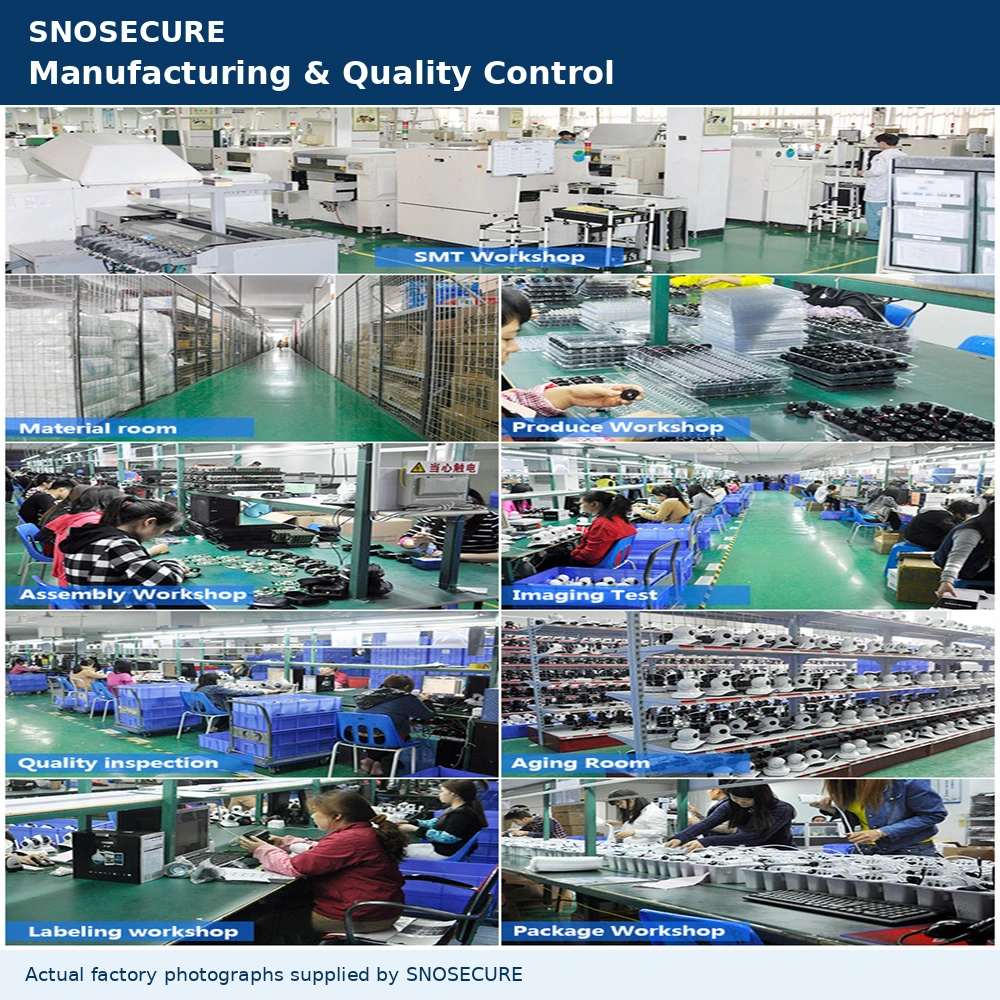
With 20 years of manufacturing experience, 6 production lines, and a 12,000m² factory, SNOSECURE supports international security brands, electronics importers, distributors, retailers, solar project contractors, IT hardware resellers and system integrators.
Our product portfolio includes:
- Solar-powered security cameras.
- 4G and Wi-Fi surveillance cameras.
- AOV solar cameras.
- Solar panels and solar routers.
- NVR security camera kits.
- Video doorbells.
- Baby monitors.
- Hunting cameras.
We support OEM/ODM customization, including product design, logo branding, color boxes, packaging and compatible product configurations.
For distributors serving colder or low-sunlight markets, SNOSECURE can discuss available solar panel options, battery configurations, recording architectures, technical specifications, sample evaluation and appropriate product testing requirements.
Specific winter charging capabilities, battery runtime and operating limits depend on the selected camera model and validated configuration.
Our main export markets include North America, Japan, the United Kingdom, France, the UAE, Saudi Arabia, South Africa and other international regions.
Looking for a reliable solar security camera manufacturing partner for your market?
Contact SNOSECURE to discuss wholesale sourcing, OEM/ODM customization, camera specifications, sample testing and long-term supply requirements.
SNOSECURE | Professional Surveillance Camera Manufacturer
Website: https://www.camhiprocam.com
Email: simple@camhiprocam.com
WhatsApp: +86-185-6568-6066
Contact: Simple Lee | Sales Director
Industry References
Solcast / pv magazine Global — November 6, 2026
October 2026 Good for PV Production in Europe, but South of France and Ukraine Miss Out
European Commission Joint Research Centre
PVGIS — Monthly Solar Radiation Data
U.S. Energy Information Administration
Solar Photovoltaic Output Depends on Orientation, Tilt and Tracking
https://www.eia.gov/todayinEnergy/detail.php?id=18871
Canadian Centre for Occupational Health and Safety
Battery Charging — Lithium-Ion Batteries
https://www.ccohs.ca/oshanswers/safety_haz/battery-charging-lithium-ion-batteries.html
PVWatts
Solar Photovoltaic Energy Estimation
