

China’s Proposed PV Technology Export Controls: What Global Buyers Should Watch
China Solar Export Controls 2026: Proposed Manufacturing Technology Restrictions, PV Supply Chain Risks, and Practical Sourcing Strategies for International Buyers
Global Solar Industry Insights | November 2026 | SNOSECURE
Is China about to stop exporting solar panels?
That’s the question some international buyers may ask after reading headlines about China’s proposed photovoltaic technology export controls.
But the answer requires an important distinction.
China’s October 2026 proposal targets selected advanced photovoltaic manufacturing technologies and associated equipment—not all finished solar panels or solar-powered products.
On October 16, 2026, China’s Ministry of Commerce (MOFCOM) and Ministry of Science and Technology published Announcement No. 48, proposing revisions to the country’s Catalogue of Technologies Prohibited or Restricted from Export.
The proposed changes include 12 photovoltaic manufacturing technologies involving polysilicon production, silicon wafer manufacturing, and solar cell production.
The announcement also introduced temporary pre-export registration requirements for covered technology transactions.
On October 21, PV Tech reported on the potential implications for the global solar manufacturing industry.
For international PV manufacturers, solar equipment importers, EPC contractors, and sourcing managers, this development deserves attention.
However, treating it as a universal ban on solar product exports would be inaccurate.
The real issue concerns advanced manufacturing know-how, technology licensing, production equipment, and overseas factory development.
So what exactly is being proposed?
And what should global buyers do to protect their supply chains?
Let’s examine the facts and the commercial implications.
1. What Happened on October 16, 2026?
China’s Ministry of Commerce and Ministry of Science and Technology announced a consultation on proposed changes to the country’s technology export catalogue.
The proposal covers 40 technologies across three sectors:
- Artificial intelligence: 23 technologies.
- Biomedicine: 5 technologies.
- Photovoltaics: 12 technologies.
Across the three sectors, 14 technologies are proposed for export prohibition and 26 for export restriction.
The consultation period runs from October 16 through November 15, 2026.
The final scope and implementation arrangements may change following the consultation.
Why is China considering these measures?
MOFCOM has explained that selected advanced technologies are increasingly used in strategically sensitive applications, including aerospace, defense, unmanned systems, and high-security infrastructure.
The government says the proposed controls are intended to manage technology transfer risks while preserving lawful international cooperation.
The photovoltaic provisions focus on specific technological capabilities rather than applying restrictions uniformly across the entire solar industry.
This distinction matters for international business.
A company purchasing finished solar modules has a different exposure from a manufacturer purchasing proprietary production technology to establish a new overseas factory.
One requirement is already active
Although the proposed catalogue amendments have not yet been finalized, temporary registration obligations for certain covered technology exports began when Announcement No. 48 was issued.
Therefore, buyers and suppliers should not assume that all compliance requirements are postponed until the final catalogue is adopted.

2. Which Solar Manufacturing Technologies Are Covered?
The proposed photovoltaic additions focus on three major parts of the manufacturing value chain.
A. Polysilicon manufacturing technology
Polysilicon is a key upstream material used to produce crystalline silicon solar cells.
The proposal identifies certain advanced production processes and equipment-manufacturing technologies.
Examples of proposed prohibited technology include:
Cold-hydrogenation fluidized-bed technology
A specified process involving single-line trichlorosilane production capacity of at least 250,000 metric tons annually.
Silane fluidized-bed technology
A process with single-line production capacity of at least 20,000 metric tons annually.
The draft also proposes restrictions on certain other polysilicon production and engineering technologies that meet technical or capacity thresholds.
These provisions are significant because access to advanced polysilicon production methods can influence manufacturing efficiency, capital requirements, and operating costs.
B. Silicon wafer manufacturing technology
Solar wafers form the base material used in many photovoltaic cells.
Manufacturers continually seek thinner wafers to reduce silicon consumption while maintaining acceptable mechanical strength and production yield.
The draft proposes export prohibition for certain technologies used to manufacture wafers with thicknesses of 70 micrometers or less.
The proposed controls also address associated equipment manufacturing technology and specified technical information.
Additional wafer technologies may fall under proposed restrictions when particular size, thickness, or process conditions are met.
For overseas manufacturers, this could affect access to advanced processes involved in ultra-thin wafer manufacturing.
C. Solar cell manufacturing technology
The solar cell category is especially important because it includes several advanced efficiency-improvement technologies.
The proposal identifies selected technologies associated with:
- Perovskite solar cells.
- Perovskite-silicon tandem cells.
- Specialized crystalline silicon cell edge passivation.
- TOPCon manufacturing.
- Heterojunction (HJT) manufacturing.
- Back-contact (BC/XBC) cell manufacturing.
The proposed treatment differs among technologies.
For example, certain high-performance perovskite and tandem manufacturing technologies are proposed for prohibition.
Selected TOPCon, HJT, and back-contact processes would be subject to restrictions when specified technical parameters are met.
Importantly, not every technology associated with TOPCon, HJT, or back-contact solar cells is automatically covered.
The precise definitions, manufacturing parameters, capacity thresholds, and technical characteristics are essential.
Examples of proposed technical thresholds
| Manufacturing area | Selected proposed threshold | Proposed treatment |
|---|---|---|
| Polysilicon | Cold-hydrogenation fluidized-bed process with single-line trichlorosilane capacity ≥250,000 metric tons/year | Prohibited technology category |
| Polysilicon | Silane fluidized-bed process with single-line capacity ≥20,000 metric tons/year | Prohibited technology category |
| Silicon wafers | Wafer manufacturing technology for thickness ≤70 μm | Prohibited technology category |
| Perovskite-silicon tandem | Production using wafer size ≥182mm and efficiency ≥30% | Prohibited technology category |
| Large-area perovskite modules | Single-junction module area ≥1m² and efficiency ≥18% | Prohibited technology category |
| Advanced crystalline silicon cells | Certain TOPCon, HJT, and BC processes meeting defined specifications | Restricted technology categories |
These are selected examples, not a complete legal classification table. Full eligibility and coverage must be evaluated against the official draft technical descriptions.
The proposed controls are aimed at technological know-how and associated manufacturing capabilities.
They should not be interpreted as an automatic ban on selling finished solar modules using these cell technologies.

3. Prohibited vs Restricted: What Is the Difference?
Understanding this distinction is essential for overseas buyers.
Proposed prohibited technologies
Technologies included in a prohibited category would not be eligible for ordinary export authorization under the applicable catalogue rules once implemented.
Companies planning overseas manufacturing projects involving these technologies may need to reconsider their technology-transfer arrangements.
Proposed restricted technologies
Restricted technologies are different.
They may potentially be exported through an applicable authorization or licensing process.
The existence of a restriction does not necessarily mean every relevant international transaction is prohibited.
However, licensing requirements can create additional uncertainty around:
- Approval timelines.
- Contract conditions.
- Technical documentation.
- End-use disclosures.
- Manufacturing schedules.
- Overseas commissioning.
- Continuing technical support.
For project investors, these factors can influence project bankability and delivery schedules.
Why this matters
Suppose an overseas manufacturer plans to build a high-efficiency solar cell production line using Chinese-origin manufacturing technology.
The project may require proprietary process documentation, specialist equipment, production recipes, and engineering support.
If some of those technologies fall within the final controlled categories, the supplier may need authorization before transferring them.
This can affect contractual obligations and project scheduling.
For international buyers, the key question is not simply whether a technology comes from China.
It is whether the specific transaction involves technology, equipment, or know-how within the applicable controlled scope.
4. Temporary Registration: What Already Applies?
One of the most important details in the October 2026 announcement is the temporary pre-export registration mechanism.
MOFCOM stated that this requirement applies from the announcement date until the revised technology catalogue is formally implemented.
It covers specified exports of technologies described in the announcement.
Examples include:
Technology ownership transfers
A Chinese entity transfers ownership of covered technology to an overseas entity.
Technology licensing
A domestic technology owner grants a foreign entity rights to use covered technology.
Changes in technology control
A technology’s owner or actual controller changes to an overseas party.
Other specified transactions
Transactions identified by MOFCOM through appropriate official notices.
The ministry has also clarified that covered key and core PV equipment requires registration in accordance with the announcement.
This is particularly relevant for suppliers of specialized manufacturing equipment and businesses developing overseas PV production facilities.
What should buyers do?
Overseas purchasers should request written clarification from their suppliers about whether the planned transaction involves technology subject to the temporary registration requirement.
If a supplier is exporting a covered production process, manufacturing technology, or associated equipment, the parties should establish compliance responsibilities before shipment or technology transfer.
What should buyers avoid?
Do not assume that ordinary equipment purchase agreements automatically cover every licensing or registration obligation.
Similarly, do not assume that registration is equivalent to final export approval.
The final legal treatment depends on the specific technology and applicable rules.
For major investments, obtain qualified trade-control advice before making irreversible commitments.

5. Does This Mean China Is Banning Solar Panel Exports?
No. The October 2026 announcement is not a blanket ban on finished solar modules.
This is the most important clarification for distributors and renewable energy importers.
MOFCOM has expressly stated that the proposed technology controls are limited in scope.
The ministry has also explained that products manufactured using the proposed controlled technologies are generally outside the catalogue’s technology-transfer controls.
Understanding the difference
Consider four different business transactions.
| Transaction | Relevance to the proposed PV technology controls |
|---|---|
| Importing ordinary finished solar panels | Not automatically covered merely because the modules were manufactured in China |
| Importing a finished solar-powered security camera | Not automatically covered by these PV manufacturing technology provisions |
| Purchasing a proprietary ultra-thin wafer production process | Potentially covered depending on the exact technology |
| Importing advanced manufacturing equipment with controlled know-how | Potentially covered; classification and registration assessment needed |
A finished solar panel and the technology used to manufacture that panel are legally and commercially different subjects.
The same applies to finished solar-powered surveillance equipment.
A solar security camera normally combines a photovoltaic charging panel, rechargeable battery, camera electronics, communications hardware, and recording software.
Importing such a finished product is not equivalent to importing proprietary polysilicon or high-efficiency solar cell manufacturing technology.
Does that mean finished products have no compliance requirements?
No.
Finished solar panels and cameras may still be subject to other applicable requirements, including customs classification, tariffs, sanctions, dual-use controls, destination-market certification, product safety, or other trade restrictions.
The correct conclusion is narrower:
This particular proposed technology catalogue revision does not, by itself, impose the same restrictions on all finished solar products.

6. How Could the Proposal Affect Global PV Manufacturing?
The most significant potential effects may arise in countries developing domestic photovoltaic manufacturing capacity.
Many governments and private investors want to establish local solar manufacturing operations.
However, creating a competitive solar factory involves more than purchasing machines.
Manufacturing know-how is critical
Advanced solar cell production requires:
- Process design.
- Specialized equipment.
- Production software.
- Process recipes.
- Material and chemical control.
- Quality assurance.
- Yield optimization.
- Engineering knowledge.
- Commissioning expertise.
A factory can have high-quality equipment but still struggle to achieve the intended production efficiency or yield.
This makes technology transfer a critical part of international PV manufacturing projects.
Potential impact on overseas manufacturing investments
If controlled technologies become more difficult to transfer, manufacturers may need to:
- Reassess technology licensing agreements.
- Confirm equipment classification.
- Extend project planning timelines.
- Consider alternative manufacturing processes.
- Negotiate additional compliance provisions.
- Reevaluate factory commissioning schedules.
Where could the impact be strongest?
The proposal may be particularly relevant for markets developing domestic manufacturing capacity, including the United States and India, and for other locations pursuing local PV value chains.
However, the actual impact will depend on the final rules, licensing practices, project structure, and the technologies selected.
It would be premature to claim that all overseas PV factory projects will be delayed or that global module prices will necessarily rise.
The clearest potential risk concerns access to selected advanced manufacturing capabilities, not an immediate halt in global solar product trade.
7. PV Supply Chain Risk: What Should Global Buyers Evaluate?
For international importers, procurement risk involves more than regulation.
A strong sourcing strategy should consider manufacturing continuity, supplier transparency, technical compatibility, logistics, and after-sales service.
The following seven areas deserve attention.
1. Product classification
Determine whether you are purchasing a finished product, standard equipment, or controlled manufacturing technology.
Do not confuse these categories.
2. Technology exposure
Ask whether the supplier needs to transfer proprietary technical knowledge, source code, manufacturing recipes, or equipment designs as part of the transaction.
3. Equipment and technical documentation
For production-line purchases, identify the equipment’s function and whether it carries controlled technology.
4. Manufacturing location
Understand where key materials, components, and finished products are manufactured.
Country of origin and supply-chain structure may affect different customs and trade requirements.
5. Contractual responsibilities
Clarify who is responsible for technology export registration, authorization, documentation, and regulatory notifications.
6. Delivery continuity
For transactions exposed to technology restrictions, consider whether approval procedures could affect commissioning or shipment milestones.
7. Supplier communication
Choose suppliers that provide timely, transparent answers to regulatory questions.
A dependable supplier should be able to distinguish confirmed obligations from uncertain future developments.
For experienced international buyers, this is a familiar purchasing principle.
Supply-chain reliability depends on accurate information, not simply the lowest quotation.

8. What Should Buyers Ask Their Chinese Suppliers?
If your company imports solar-related products or PV manufacturing equipment from China, ask practical, transaction-specific questions.
Here is a recommended supplier evaluation checklist.
| Question | Why it matters |
|---|---|
| Are we purchasing finished products or manufacturing technology? | Establishes the relevant transaction category |
| Does the transaction involve any of the 12 proposed PV technologies? | Identifies potential regulatory exposure |
| Are technical thresholds relevant to the specific process? | Prevents overbroad classification |
| Is covered equipment involved? | Helps determine registration obligations |
| Is pre-export registration required? | Addresses current interim measures |
| Would a future export license be needed? | Supports long-term planning |
| Who owns and transfers process know-how? | Clarifies technology-transfer responsibilities |
| Are delivery milestones dependent on regulatory approvals? | Reduces contractual uncertainty |
| Can the supplier provide written compliance clarification? | Supports procurement documentation |
| What alternative sourcing or project arrangements are available? | Improves continuity planning |
For major manufacturing investments, these questions should be addressed with the support of qualified legal and technical advisers.
For ordinary finished-product procurement, the checklist can be simplified around product classification, destination-market compliance, delivery, and warranty support.
9. What Does This Mean for Solar Equipment Importers and Distributors?
Not every international buyer is investing in a solar manufacturing factory.
Many businesses import finished solar modules, solar accessories, portable systems, electronic products, and surveillance equipment.
For these buyers, the immediate concern may be whether the new proposal affects ordinary purchasing.
The answer depends on the transaction.
Finished solar module importers
The proposed catalogue changes do not automatically prohibit ordinary finished-module exports.
However, importers should continue monitoring broader solar trade policies and applicable destination-market requirements.
Solar project EPC contractors
EPC companies purchasing finished modules and balance-of-system equipment should distinguish those purchases from manufacturing-technology transfers.
The proposal may have a more direct effect on projects involving factory development or specialized production equipment.
Consumer electronics distributors
Businesses importing finished electronics should not assume the PV manufacturing proposal applies to every product containing a solar panel.
They should instead assess the actual product and other applicable trade regulations.
Solar-powered surveillance distributors
Solar-powered security cameras are a good example of a separate finished-product category.
These cameras use photovoltaic charging technology, but they are not normally exports of proprietary solar cell manufacturing know-how.
A finished solar camera should therefore not be classified as controlled under the proposed PV manufacturing technology list simply because it includes a solar panel.
Nevertheless, the product may have its own requirements involving radio equipment, battery transportation, electrical safety, cybersecurity, customs, and local market compliance.
For importers, understanding these distinctions helps avoid unnecessary supply-chain disruption.
10. Solar-Powered Security Cameras: A Different Product Category
As solar technology expands into agriculture, construction, commercial facilities, and remote infrastructure, solar-powered surveillance products have become a useful category for security distributors.
A typical solar security camera system may include:
- A photovoltaic charging panel.
- Rechargeable battery storage.
- A camera sensor and image processor.
- Wi-Fi or 4G communications.
- Motion detection or AOV recording.
- Local or supported remote storage.
- Weather-resistant outdoor housing.
These products serve a different purpose from grid-scale solar panels or solar cell manufacturing machinery.
Why does the distinction matter commercially?
International buyers may read news about PV technology restrictions and become concerned about every solar-related product.
Clear supplier communication can help them understand the actual scope of the policy.
For example, a distributor purchasing finished 4G solar security cameras should verify product compliance and logistics requirements.
A manufacturer transferring advanced PV production technology overseas may need a different export-control analysis.
These are separate procurement scenarios.
Related B2B markets
Solar surveillance products may appeal to:
Security importers and distributors: Expanding wireless outdoor camera ranges.
Solar project contractors: Supporting remote site monitoring and selected security applications.
Agricultural equipment suppliers: Providing off-grid property and equipment surveillance.
Construction contractors: Monitoring temporary sites without permanent broadband.
System integrators: Developing suitable outdoor and remote security solutions.
For these businesses, the practical priorities remain product reliability, compatible connectivity, certifications, customization, and stable supply.

11. What Should Global Buyers Watch Before the End of 2026?
Several developments will determine how the proposed restrictions affect international business.
Final consultation outcome
The public consultation is scheduled to close on November 15, 2026.
The final catalogue may retain, revise, or otherwise adjust the proposed technical thresholds and requirements.
Licensing arrangements
For technologies ultimately classified as restricted, businesses will need to understand authorization procedures and practical approval timelines.
Equipment classification
The treatment of critical equipment carrying controlled technology may be important for overseas factory projects.
Overseas production strategies
PV manufacturers may reassess their approaches to international technology licensing, equipment procurement, joint ventures, and local manufacturing.
Supplier transparency
International buyers will increasingly value suppliers that explain the specific compliance implications of their products and transactions.
Finished-product trade
Importers should distinguish this technology proposal from separate developments involving finished solar modules, electronics, batteries, and other products.
The final impact will depend on the implemented rules and the circumstances of each transaction.
The most effective sourcing strategy is to monitor confirmed policy changes while avoiding decisions based on exaggerated headlines.
Frequently Asked Questions
Is China banning all solar panel exports in 2026?
No. The October 2026 proposal targets selected advanced PV manufacturing technologies and associated equipment. It does not create a blanket prohibition on finished solar module exports.
How many photovoltaic technologies are covered?
The draft proposes adding 12 PV technologies involving polysilicon, silicon wafer, and solar cell manufacturing.
Have the proposed technology restrictions already taken effect?
The catalogue revisions are still proposals as of this article’s publication. However, temporary pre-export registration requirements for covered technology transactions began on October 16, 2026.
Are TOPCon, HJT, and BC solar cells banned from export?
No such blanket finished-cell or finished-module ban follows from this proposal. Selected manufacturing technologies associated with these cell architectures are proposed for restriction when specified technical thresholds are met.
Could overseas solar factories be affected?
Potentially. Projects depending on covered manufacturing technology, equipment, licensing, or technical support may face additional compliance requirements or planning uncertainty.
Are ordinary solar panels and solar accessories automatically restricted?
No. Product classification, the exact transaction, and applicable legal requirements determine whether controls apply. This proposal should not be treated as a universal restriction on all solar-related goods.
Are finished solar-powered security cameras covered?
Finished solar-powered security cameras are not automatically covered by the proposed PV manufacturing technology categories merely because they contain photovoltaic panels. Other trade, product, telecommunications, and battery-related requirements may still apply.
What should international buyers do now?
Review the official announcement, classify the exact goods and technology being purchased, request written compliance clarification from suppliers, and monitor the final catalogue revision. Obtain professional advice for potentially controlled technology transactions.
Conclusion: Technology Controls Are Not the Same as Product Export Bans
China’s proposed 2026 photovoltaic technology export controls represent an important development for the global solar manufacturing industry.
The measures focus on selected advanced production technologies and related equipment rather than all solar products.
For overseas manufacturers, the proposal may affect technology transfer, factory development, and access to specialized manufacturing capabilities.
For importers purchasing ordinary finished solar products, the implications may be much more limited.
The distinction matters.
Technology transfer, manufacturing equipment exports, and finished-product shipments are not the same commercial or regulatory activities.
International buyers should therefore respond with careful supplier verification rather than unnecessary alarm.
The companies best positioned for changing global trade conditions will be those that understand their supply chains, maintain accurate compliance documentation, and work with dependable manufacturing partners.
For B2B procurement, this is the lesson that matters most:
Don’t make purchasing decisions based on headlines alone. Understand exactly what is being regulated and how it affects your products.
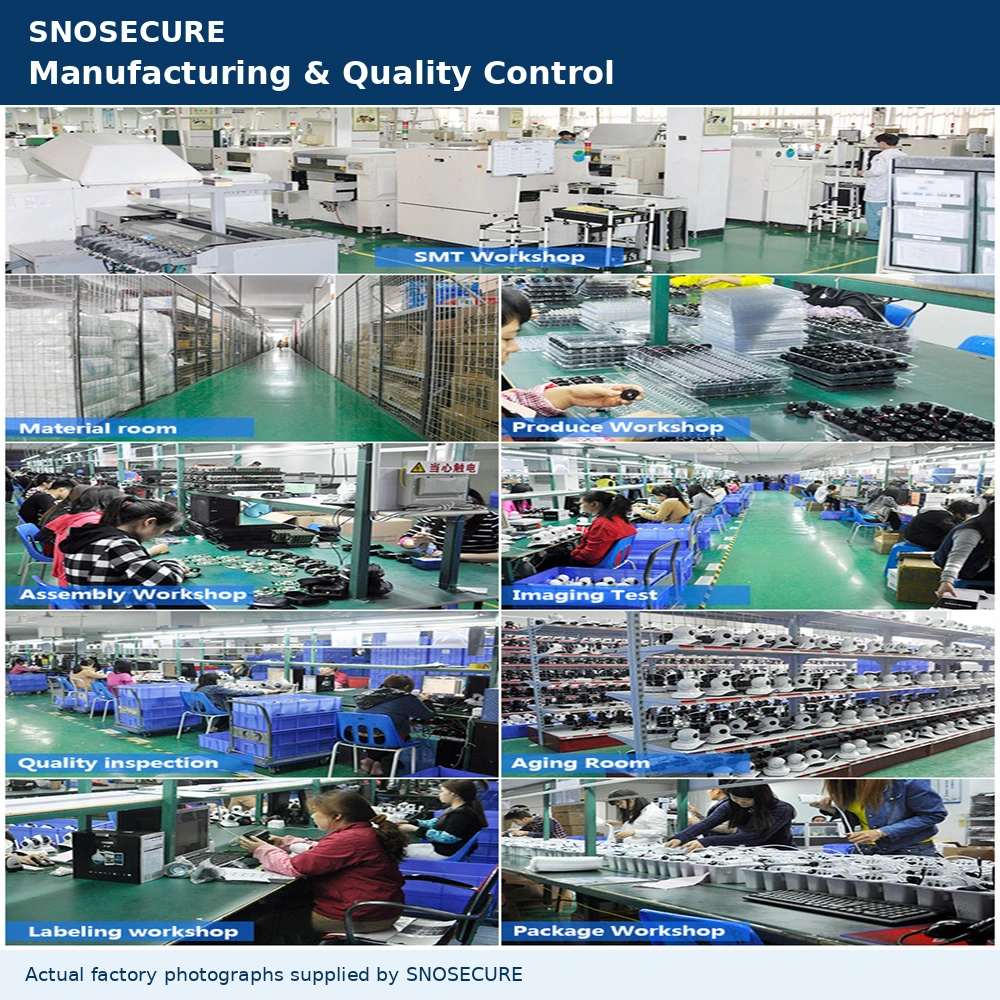
About SNOSECURE | Your OEM/ODM Surveillance Camera Manufacturing Partner
SNOSECURE is a professional B2B surveillance equipment manufacturer and wholesale supplier based in Shenzhen, China.
With 20 years of manufacturing experience, 6 production lines, and a 12,000m² factory, SNOSECURE supports international security brands, electronics importers, distributors, retailers, solar project contractors, IT hardware resellers, and system integrators.
Our product portfolio includes:
- Solar-powered security cameras.
- 4G and Wi-Fi surveillance cameras.
- AOV solar cameras.
- Solar panels and solar routers.
- NVR security camera kits.
- Video doorbells.
- Baby monitors.
- Hunting cameras.
We support OEM/ODM customization, including product design, logo branding, color boxes, packaging, and application-specific configurations.
For importers evaluating China’s evolving technology export policies, SNOSECURE can provide product-specific information to support the sourcing assessment of our finished surveillance products.
Our primary export markets include North America, Japan, the United Kingdom, France, the UAE, Saudi Arabia, South Africa, and other international regions.
Whether you are expanding a private-label solar camera range or sourcing surveillance solutions for commercial and remote applications, SNOSECURE welcomes the opportunity to discuss your requirements.
Looking for a reliable OEM/ODM surveillance camera manufacturing partner?
Contact SNOSECURE for product specifications, sample evaluation, customization options, and wholesale inquiries.
SNOSECURE | Professional Surveillance Camera Manufacturer
Website: https://www.camhiprocam.com
Email: simple@camhiprocam.com
WhatsApp: +86-185-6568-6066
Contact: Simple Lee | Sales Director
